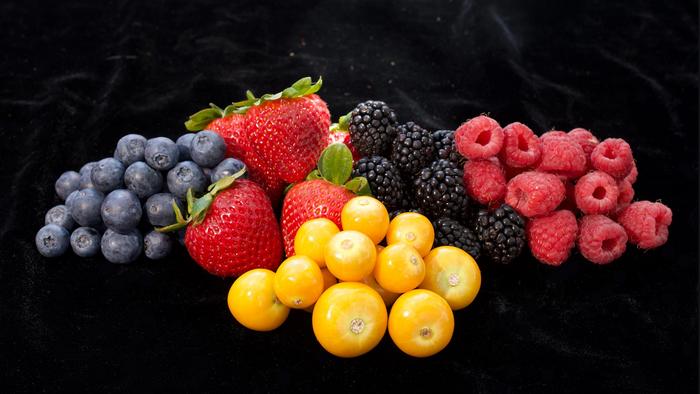
Many people have never heard of the Goldenberry fruit (Physalis peruviana) before; it is a sweet tasting, minor crop that some consider to be a superfood because of its high nutritional value. However, it is underutilized and grown in only a few regions.
Primarily grown in South America, goldenberry growers still rely on bushy crops that are “not really domesticated,” says Miguel Santo Domingo Martinez, PhD, a postdoctoral fellow in the lab of Zach Lippman, PhD, at Cold Spring Harbor Laboratory (CSHL). Colombia is the main producer of goldenberries, with some additional production occurring in Peru, Ecuador, South Africa, and India. But the massive, sprawling plants are cumbersome. In order to enable large-scale production, the fruit’s growth habit and breeding process would have to be improved.
Now, a team from the Lippman lab has used CRISPR to make the goldenberry easier to grow, opening up the possibility for large-scale farming. They report the development of high-quality genome assemblies alongside transformation and genome-editing approaches, used to rapidly modify goldenberry plant architecture by targeting the two sub-genome copies of the classical stem length regulator ERECTA. The CRISPR-edited crops could be key to breeding plants that are resistant to new diseases, pests, or drought.
This work is published in Plants People Planet in the paper, “Engineering compact Physalis peruviana (goldenberry) to promote its potential as a global crop.”
“By using CRISPR, you open up paths to new and more resilient food options,” said Blaine Fitzgerald, the greenhouse technician in the Lippman lab. “In an era of climate change and increasing population size, bringing innovation to agricultural production is going to be a huge path forward.”
Previously, the Lippman lab used CRISPR to target genes in tomatoes and the groundcherry to make the plants more compact for urban farming. Building off this work, the team edited similar genes in goldenberries. The resulting crops grew 35% shorter, making planting in denser areas possible and maintenance easier. Next, Lippman’s lab searched for goldenberries with the tastiest fruits. This involved eating “hundreds of them, walking a field, and trying fruit off every plant in the row,” Fitzgerald said with a laugh.
After breeding several generations of the most delicious and compact goldenberry crops, the team had obtained two distinct lines ripe for production. While these plants produced slightly smaller fruits, the next steps will involve using CRISPR to emphasize other desirable traits. The team hopes to seek additional regulatory approval for growers to get seeds and start producing the newly developed varieties.