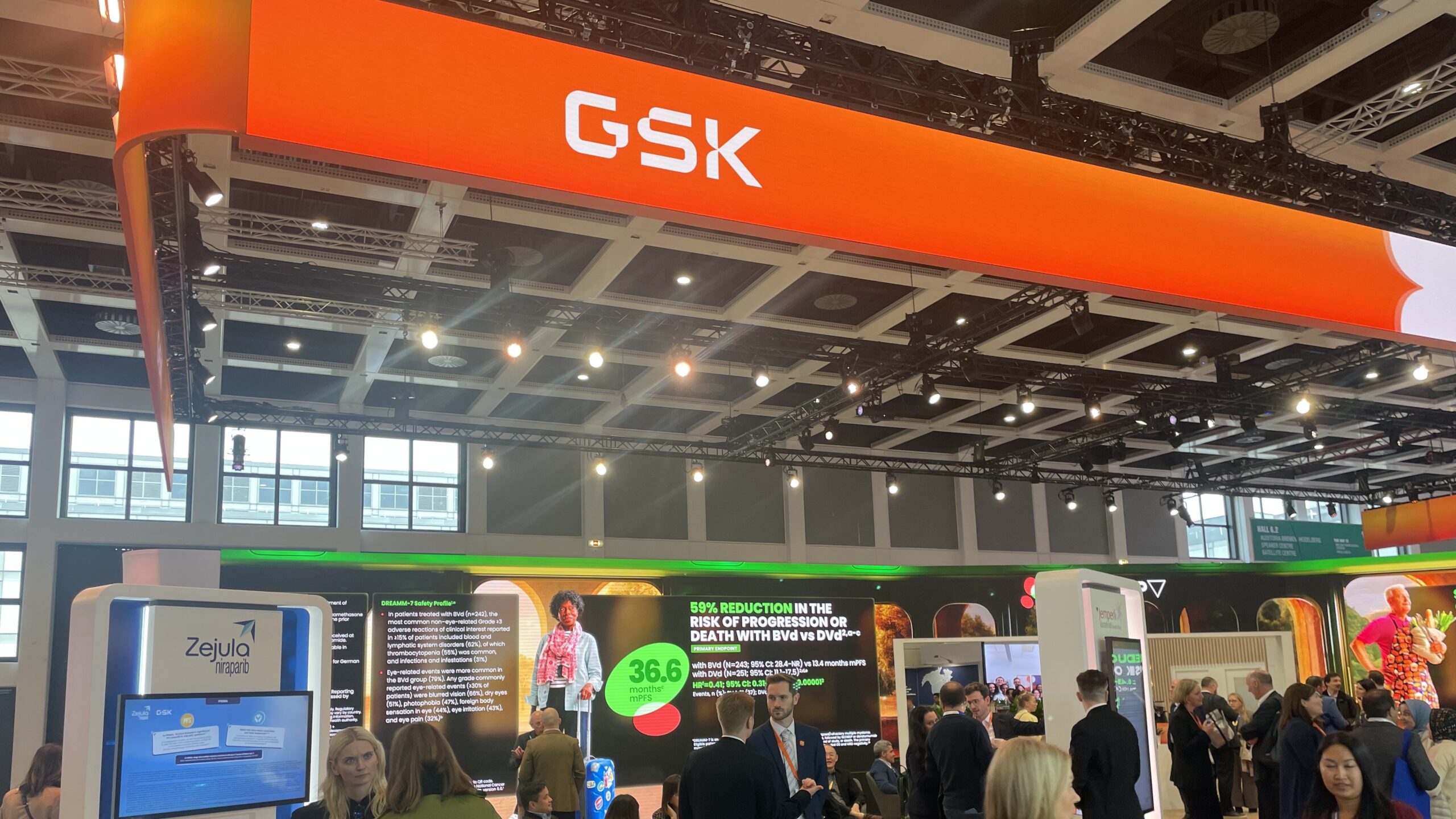
GSK is paying $2.2 billion to buy Rapt Therapeutics and its anti-immunoglobulin E (IgE) antibody to protect against food allergy reactions.
Rapt only licensed the therapy, called ozureprubart, from China’s Jemincare Pharmaceutical a year ago. While Jemincare had been evaluating the drug in phase 2 trials for asthma and chronic spontaneous urticaria in China, Rapt took ozureprubart into a phase 2b study in the U.S., Canada and Australia as a prophylactic for patients with food allergies in October 2025.
Ozureprubart targets the same epitope as Novartis and Roche’s injectable IgE antibody inhibitor Xolair, which, in 2024, became the first medicine approved by the FDA to reduce allergic reactions that can occur from accidental exposure to certain foods.
While Xolair is injected every two or four weeks, Rapt had been banking that ozureprubart’s extended half-life means it could match Xolair’s efficacy and safety while only needing to be administered every 12 weeks.
Tuesday morning, it appeared that GSK has bought into this vision. The British Big Pharma announced it is paying $58 per share of Rapt—39% above the Bay Area biotech’s closing price of $35.10 on Friday, Jan. 16.
That price equates to an aggregate equity value of $2.2 billion, according to GSK, which added that the upfront investment net of cash acquired comes to $1.9 billion. Taking over Rapt will give GSK the rights to ozureprubart outside of China, where the drug is still owned by Jemincare’s subsidiary.
“The addition of ozureprubart brings another promising new, potential best-in-class treatment to GSK’s pipeline,” GSK Chief Scientific Officer Tony Wood, Ph.D., said in the Jan. 20 release.
“Food allergies cause severe health impacts to patients with existing treatment requiring injections as frequently as every two weeks,” Wood added. “Ozureprubart offers the opportunity to bring sustained protection to patients with dosing every 12 weeks, and is consistent with our approach to acquire assets that address validated targets and where there is clear unmet medical need.”
The phase 2 study of ozurepubart Rapt initiated is due to read out in 2027, according to GSK, which also referred to plans to launch a phase 3 program.
Related
Rapt CEO Brian Wong, M.D., Ph.D., said the acquisition by GSK “offers an attractive path forward for our programs, particularly the opportunity we envision for ozureprubart in food allergy.”
“This transaction has the potential to provide access to the global development and commercialisation capabilities, resources and infrastructure that GSK has to offer and ultimately bring added value to our pipeline, patients and stockholders,” Wong added.
Not everything has gone smoothly for Rapt in recent years, including two rounds of layoffs and dropping its lead asset zelnecirnon. The FDA placed phase 2 atopic dermatitis and asthma trials of the small-molecule CCR4 inhibitor on hold in February 2024 after a patient in the atopic dermatitis trial experienced liver failure after taking the small-molecule CCR4 inhibitor.
That setback led the company to drop zelnecirnon and pivot to ozureprubart.
In addition to ozureprubart, Rapt also has two CCR4 antagonists still in development, according to the biotech’s website. One is in the preclinical stage for an undisclosed inflammation indication, and the other is a Hanmi-partnered small molecule, tivumecirnon, which completed a phase 2 trial for gastric cancer in combination with Merck & Co.’s Keytruda in 2024.